I want to share my personal experience—not to attack anyone—but so that others can learn from what happened to me. Small business owners, artisans, and entrepreneurs often rely on trust when working with others. But sometimes, trust can be broken, and the consequences ripple far beyond money.
The Consignment Arrangement
Several years ago, I entered into what I believed was a straightforward consignment agreement. For those unfamiliar, consignment means you provide goods to someone to sell on your behalf. The goods remain your property until sold, and once sold, the seller is supposed to remit proceeds back to you (in my case, 70% to me, 30% to the seller as commission).
On paper, this should have been simple. But in practice, things turned into a nightmare.
The Dispute Over Records
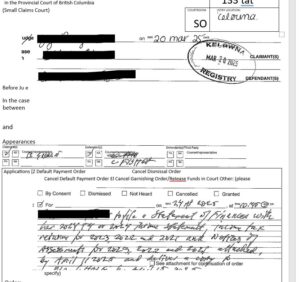
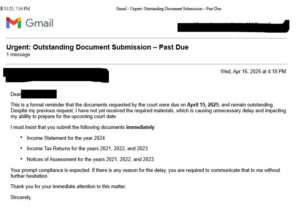
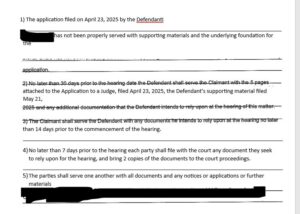
Despite repeated requests, the other party refused to provide financial and tax records as mandated by the court. These records were critical to prove how much product had been sold and what proceeds were owed. Without transparency, I had no way to reconcile what was missing versus what was returned.
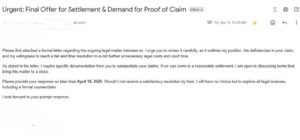
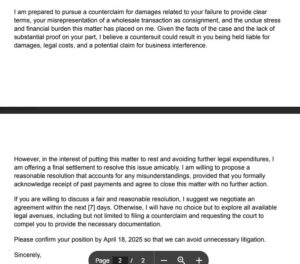
Instead of cooperating, I was pressured with ultimatums. At one point, I was threatened with a lawsuit if I didn’t accept a proposal that made no sense legally or financially. I tried to remain calm, reminding myself of spiritual principles—explaining the laws of karma and how our actions eventually return to us. But it was clear the matter was headed for court again, this time because I was countersued.
Court Applications and Intimidation
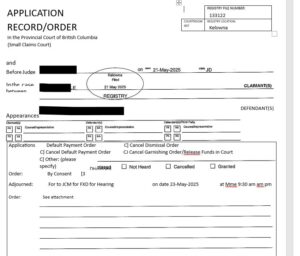
While in the process of following a court order to collect tax documents, I didn’t agree to the terms the other party demanded. Soon after, I was served with an application to court without rhyme or reason. I felt threatened, intimidated, and judged from all directions.
The allegations included claims that I was somehow preventing the individual from spending time with a dying father, that I was harassing their family, stalking, and even threatening children. I was stunned—these claims were completely false. I hadn’t even known about their father until reading the allegations.
To make matters worse, I later discovered claims that I had supposedly received $1,000 in cash—something I never received and only learned about after the fact.
Our written agreement—documented in emails and signed off—was always consignment, not wholesale. To keep the record straight, the court even ordered a full Interac transaction report, which has still not been provided. I’ve already posted all relevant documents in previous blogs for transparency, and I am still waiting for those reports.
Police and the Civil System
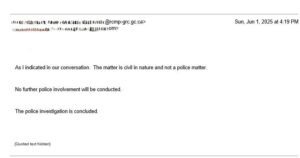
Eventually, the situation escalated to the point where I was reported to the police. After reviewing everything, the officers made it clear: this was strictly a civil matter, not a criminal case.
What stood out most was that the officers actually apologized to me for having to deal with the situation. They told me plainly that every word from this individual could not be trusted and advised me to stay away. It was also clear this type of behavior was already well known to the police.
That clarified things, but the stress and disruption it caused in my life were still significant.
A Pattern Spanning 20 Years
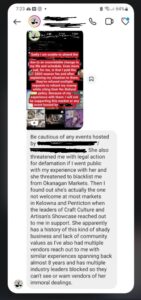
As I began to share my story, more and more people came forward. I realized I was not alone. Others in the community had experienced the same type of deception—broken promises, missing records, unpaid proceeds, and intimidation when they asked for answers.
This isn’t an isolated incident. By many accounts, this has been a pattern of behavior stretching back nearly 20 years. Time and again, individuals have been drawn in, given their trust, and then left frustrated, unpaid, or misled.
Even the police acknowledged this pattern and made it clear they were familiar with these issues. That gave me clarity: what I went through wasn’t unique—it was part of a much bigger cycle. And unless people speak out, the cycle will continue.
The Online Harassment
During this process, there were even unauthorized attempts to access my website, social media, and email accounts. I was harassed, stalked, and threatened simply for standing my ground.
At one point, I had shut down this blog entirely. But every time I tried to move on, judgment and misinformation would surface again. Eventually, I realized that staying silent only allows misinformation to spread, while speaking up helps others see the truth.
Since I began sharing my experience, many people have told me they’ve “woken up” and are no longer as easily manipulated as before. That has given me strength to keep writing.
Lessons Learned
- Always have a written consignment agreement. Even if you trust the person, get terms in writing—what percentage they keep, how sales are reported, and when payments are due.
- Demand proper records. Tax filings, receipts, and sales ledgers aren’t optional—they’re the backbone of accountability.
- Separate civil from criminal. Just because someone refuses to pay doesn’t make it fraud in the eyes of the police. It often falls under civil court jurisdiction.
- Stay grounded. Rumors and gossip can sting, but losing faith in yourself or your community only gives more power to negativity.
- Protect your wellbeing. This process caused me enormous stress, but it also reinforced my belief that standing for fairness, even when unpopular, is the right path.
Why I’m Sharing This
I don’t want others to go through what I experienced. If you’re starting a business or working with others on consignment, protect yourself with contracts, transparency, and legal safeguards.
Perhaps most importantly—don’t let intimidation, judgment, or gossip cause you to lose faith in yourself or in humanity. These tactics have been used for centuries to create division and mistrust. But truth has a way of surfacing, and karma has a way of balancing things out.
When we stand for fairness and accountability, we raise the vibration of our communities. And in the long run, truth always wins.